Why Flies Suddenly Appear in Summer (And How to Prevent Flies Inside the House)
Pest Control London » News » Why Flies Suddenly Appear in Summer (And How to Prevent Flies Inside the House)
20 May 2026
Why Flies Suddenly Appear in Summer (And How to Prevent Flies Inside the House)
It usually starts the same way.
You open the windows, maybe leave the back doors open a little longer than usual, and enjoy the change in weather. Then you notice it. A few flies circling the kitchen. One landing on the worktop. Another appearing near the bin.
Give it a couple of days, though, and it can feel like they’ve taken over the house.
Why flies become more active in summer
Flies are always around, but summer changes everything.
Warmer weather speeds up their entire life cycle. They feed more, move more, and most importantly, they lay eggs far more quickly. What might have been a slow, manageable issue in cooler months can escalate rapidly once temperatures rise.
House flies, fruit flies and even drain flies all follow the same pattern. They look for somewhere warm, somewhere with food, and somewhere suitable to breed. If they find it, they stay.
And in many homes, they don’t have to look very far.
What attracts flies in the first place
Flies are drawn to very specific things, and most of them are part of everyday life.
Food is the main one. Not just what’s left out, but what’s been missed. A bit of fruit going soft in a bowl, sugary substances on a surface, or even a few drops of juice can attract flies almost immediately.
Then there’s waste. Garbage, food residue, and rotting food are prime breeding sites. Even a cat’s litter box or leftover pet food can become a magnet if it’s not cleaned regularly.
Smell plays a big role too. Flies are incredibly sensitive to it. What seems fine to us can be enough to bring them in from outside.
Why they seem to appear overnight
This is where most people get caught out.
It’s not always that flies are coming in from the garden. Often, they’re already inside the house, just in a different stage of their life cycle.
Flies lay eggs in hidden areas. Inside bins, along drains, under appliances. Once those eggs hatch, you suddenly see an increase in activity and it feels like a new problem has appeared overnight.
In reality, it’s been building quietly.
The types of flies you’re likely dealing with
If you’re trying to get rid of flies, it helps to know what you’re dealing with.
Common house flies are larger and more obvious. They tend to land on food, surfaces, and move freely around the home.
Fruit flies are smaller and usually hover in one place. You’ll find them near fruit, sugary liquids or even a glass with a bit of sugar water left in it.
Drain flies stick close to sinks and pipes. If you’re seeing flies around plugholes or damp areas, that’s often the source.
Each one points to slightly different breeding sites, but the principle is the same. Something is attracting them, and giving them somewhere to lay eggs.
Simple ways to prevent flies inside the house
If you catch it early, prevention can go a long way.
Keeping things clean is still the best way to prevent flies. That means promptly cleaning surfaces, not leaving food out, and making sure garbage is dealt with regularly.
Store food properly and avoid leaving fruit exposed for too long. Even small changes here can make a difference.
Windows and doors are another factor. A fly screen can help reduce how many flies get in, particularly in kitchens. Making sure door frames close properly and there aren’t small gaps or holes also limits access.
Air flow matters too. Flies prefer still, warm air. Keeping spaces ventilated can help deter flies from settling.
Do home remedies and fly traps actually work?
There’s no shortage of home remedies out there, and some are surprisingly effective, at least in small numbers.
One of the most common is apple cider vinegar mixed with a few drops of dish soap in a tall glass. Cover it loosely with plastic wrap, secure it with a rubber band, and it can catch fruit flies quite well.
Sticky traps and fly traps can also help reduce visible flies. Light traps are useful in certain areas, especially where flies are drawn to light.
There are also natural ways people try to repel flies, such as using basil, lavender or bay leaves. These can help slightly, particularly in smaller spaces, but they won’t deal with a larger fly infestation.
They’re part of the picture, not the full solution.
When a few flies turn into a bigger problem
If you’re constantly seeing flies, or noticing dead flies building up near windows, it’s usually a sign there’s more going on.
At that point, it’s less about rogue flies getting in and more about an established issue inside the property. Breeding sites are already in place, and flies are continuing to develop and emerge.
Trying to get rid of flies without addressing that source can feel like a losing battle.
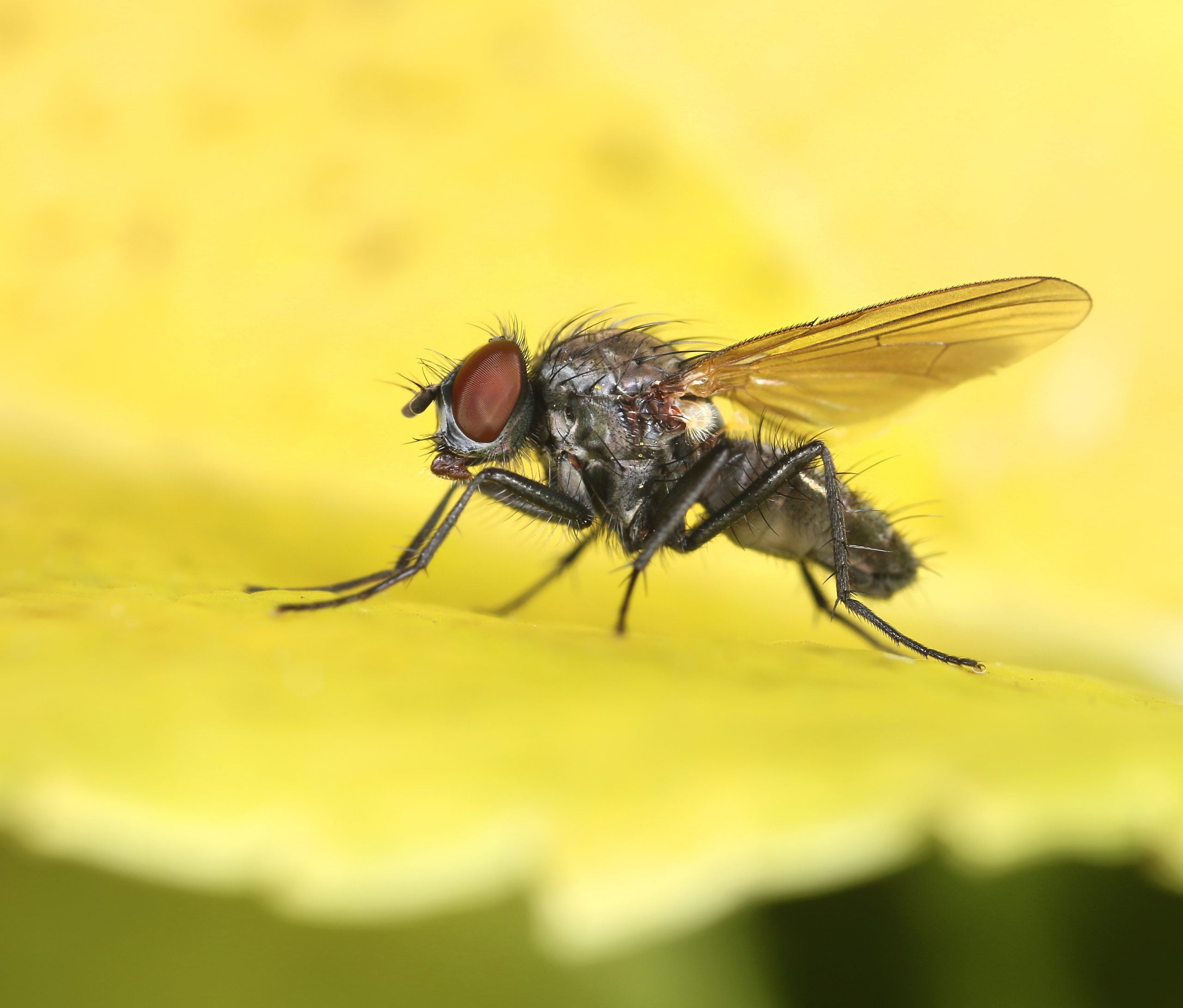
A macro shot of a fly on the ground
How we deal with fly infestations at Shield Pest Control
When we’re called out to deal with flies, the first step is always to understand the cause.
That means identifying what’s attracting them, where they’re breeding, and how they’re moving through the property. It could be waste management, drainage issues, or access points that haven’t been noticed.
From there, we put proper fly control measures in place. This can include professional-grade fly traps, light traps, and targeted treatments designed to break the cycle, not just catch what’s visible.
The aim isn’t just to reduce numbers. It’s to stop the problem at its source and prevent flies from returning.
A quick word before it gets out of hand
Most fly problems don’t start as a big issue.
It’s usually just a few flies. Easy to ignore, easy to put off dealing with.
But if they’ve found somewhere to feed and somewhere to breed, they won’t go away on their own. Summer just speeds the whole process up.
If you’re starting to notice that shift, it’s usually worth acting sooner rather than later.
Shield Pest Control Managing Director, Daniel Steward, is proud to celebrate 25 rewarding years at the business, following in the footsteps of his father, Allan Steward, ......
Seeing a few ants in the garden is perfectly normal, especially during the warmer months. But what happens when they start appearing in your kitchen, ......
Whether you're responsible for a commercial property, agricultural land, public space or business premises, dealing with pests effectively is about much more than simply applying ......
At Shield Pest Control, we're proud to have a team of dedicated professionals who are passionate about delivering exceptional service to our customers. Today, we're ......