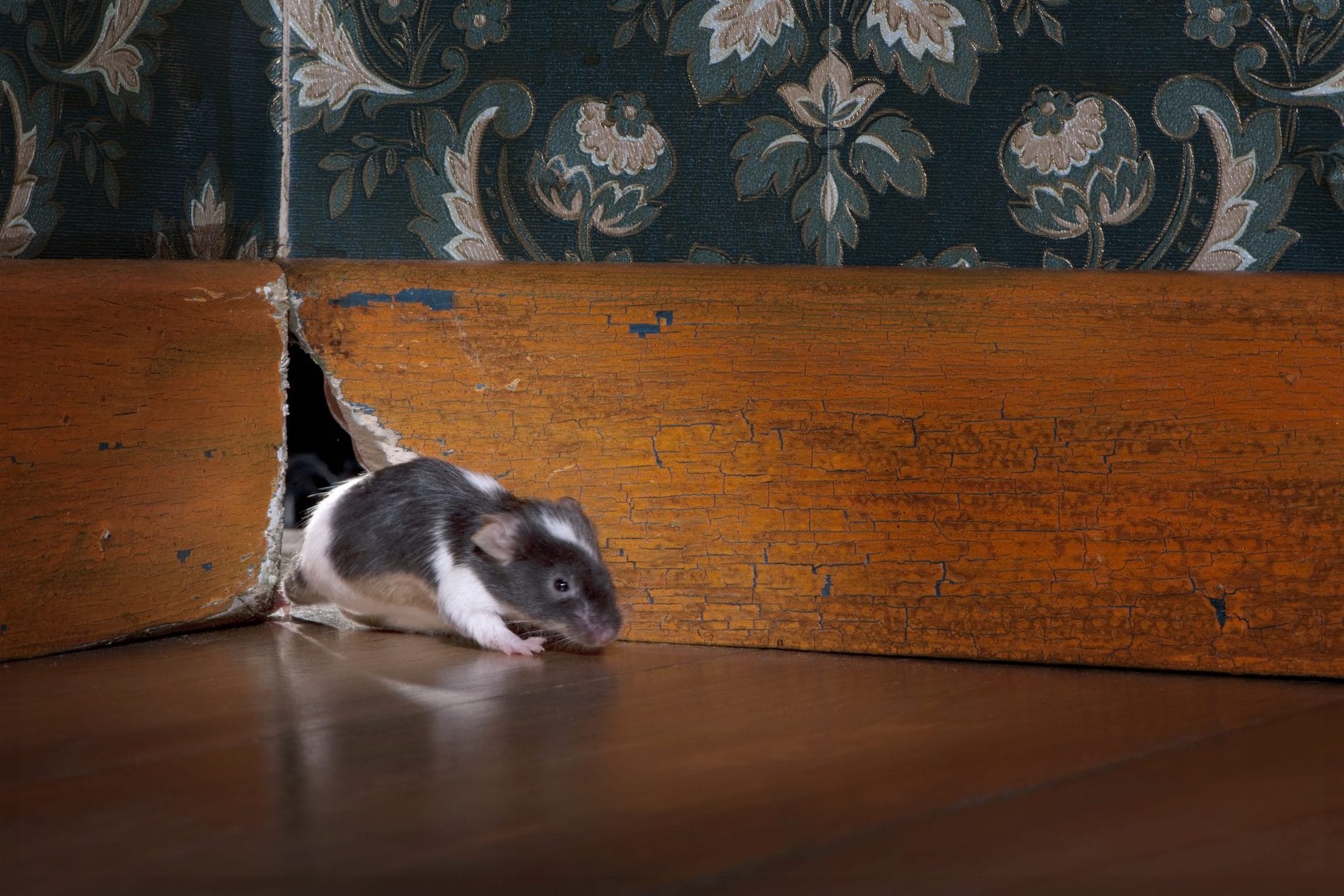
In London, mice are part of the landscape. Whether it’s a period terrace, a converted flat or a commercial unit, most properties will encounter rodents at some point. The issue is rarely whether mice will appear, but how quickly they’re noticed.
And that’s the problem. House mice are quiet, quick and good at staying out of sight. By the time most people realise something’s wrong, there’s already an established mouse infestation behind the scenes and controlling mice can become extremely difficult.
Knowing what to look for makes all the difference.
Why mice settle so easily in London buildings
London properties, particularly older ones, offer everything mice need without much effort. Warmth from central heating boilers, easy access through ageing brickwork, and a steady supply of food all play a part.
Mice live comfortably in cavity walls, under floorboards, and above suspended ceilings. In blocks of flats or terraced housing, they’ll often move between properties unnoticed, using pipe cables and structural gaps like hidden corridors.
They don’t need much space either. A small gap around exterior doors or a poorly sealed opening is enough. Once inside, they tend to stay put, especially if food sources are consistent. Therefore it is important to seal entry points to enhance your mouse control protection and prevent mouse infestation.
Mouse droppings: the tell-tale sign most people miss at first
For many households, the first signs of mice is mouse droppings, although they’re often dismissed initially as dirt or debris.
They’re small, dark and slightly pointed at the ends, usually found tucked along walls or hidden in cupboards. Kitchens are a common hotspot, particularly under the kitchen sink or near food containers.
What matters is frequency. Finding one or two might not seem like much, but if you continue to find mouse droppings in the same area, it points to regular mouse activity.
Fresh droppings are darker and softer. Older ones dry out and crumble. If you’re seeing both, it suggests the problem has been there longer than you think.
Gnaw marks and quiet damage
Mice eat constantly which is why the can become a huge pest problem. It’s not just about hunger, it’s instinct. Their teeth never stop growing, so they gnaw to keep them in check.
That’s where the damage starts to show.
You might notice gnaw marks on food packaging, especially anything stored in cardboard or soft plastic. Storage boxes are another target, as are skirting boards and even softer materials like insulation.
Wires are a particular concern. It’s not uncommon for mice to chew through electrical cables, which introduces a real risk of electrical fires. In London homes, where wiring can already be dated, this becomes more than just a nuisance.
Smudges, streaks and those odd marks along the wall
This is one people often overlook.
Mice don’t wander aimlessly. They follow the same routes over and over again, usually sticking close to walls. Over time, repeated contact leaves behind dark grey marks or what we call oily rub marks.
These come from body grease in their fur. You’ll typically see them along skirting boards or tight corners where mice pass frequently.
They’re subtle. Easy to ignore. But once you spot them, they’re hard to unsee.
Noises you can’t quite place
You hear it late at night. A faint scratching. Maybe a light scurrying sound behind the wall.
Then it stops.
Mice are nocturnal, so most of their activity happens when the house is quiet. In properties with roof spaces or suspended ceilings, the sound can travel in odd ways, making it difficult to pinpoint.
Sometimes it’s brief, sometimes more persistent. Either way, it’s rarely nothing.
Nests hidden in plain sight
Mice build nests wherever they feel safe and undisturbed.
Lofts are an obvious choice, but they’re just as likely to settle behind appliances, inside airing cupboards or within cavity walls. They use whatever they can find. Paper, fabric, insulation, even bits of cardboard.
If you come across small mounds of shredded material, especially in tucked-away areas, it’s worth paying attention. Nests are usually positioned close to food, so the mice don’t have to travel far.
When pets start acting differently
It’s not a definitive sign, but it’s one we hear about often.
Dogs and cats tend to notice mice before people do. They’ll linger near cupboards, stare at walls, or become unusually focused on certain spots in the house.
On its own, it might not mean much. Paired with other signs, it can confirm suspicions.
The bigger issue behind a small problem
It’s easy to underestimate mice. They’re small, after all. Easy to dismiss.
But a mouse problem doesn’t stay small for long.
Mice breed quickly. What starts as a couple of rodents can turn into a full infestation in a matter of weeks. Alongside the damage, there are health concerns too. Contaminated food, bacteria spread across surfaces, and the risk of diseases are all part of the picture.
In densely packed areas of London, the issue rarely stays contained to one property either.
Trying to deal with it yourself
Most people start with mouse traps. It’s the obvious first step.
And sometimes, they work, to a point.
But traps tend to deal with individual mice, not the wider infestation. You might catch one or two, yet the underlying problem remains. Mice tend to stay hidden, and without identifying entry points or nesting areas, control efforts can feel like guesswork.
It’s also not uncommon for people to miss how mice are getting in altogether.
Where professional pest control makes the difference
This is where things shift.
At Shield Pest Control, the focus isn’t just on removing mice, it’s understanding how and why they’re there in the first place. That means identifying entry points, tracking movement patterns, and locating nests.
From there, we put proper mouse control measures in place. Not just traps, but a combination of targeted treatments and proofing work designed to stop the problem returning.
In London properties especially, that level of detail matters. Without it, you’re often just scratching the surface.
A final word from our team
Most mouse problems don’t start with something obvious. It’s usually a small sign, a bit of movement, a few droppings, a noise you can’t quite explain.
The earlier those signs are picked up, the easier it is to deal with.
Leave it too long, and it becomes something else entirely.
Shield Pest Control Managing Director, Daniel Steward, is proud to celebrate 25 rewarding years at the business, following in the footsteps of his father, Allan Steward, ......
Seeing a few ants in the garden is perfectly normal, especially during the warmer months. But what happens when they start appearing in your kitchen, ......
Whether you're responsible for a commercial property, agricultural land, public space or business premises, dealing with pests effectively is about much more than simply applying ......
At Shield Pest Control, we're proud to have a team of dedicated professionals who are passionate about delivering exceptional service to our customers. Today, we're ......